Since 1964, Colombia has been embroiled in an internal conflict between the national army, guerrilla movements, and neo-paramilitary groups, which, despite various peace negotiations and agreements, continues to this day. The primary cause of the conflict is the unequal distribution of land, with the guerrilla movements seeking a more equitable division. In Colombia’s rural economy, rich in both aboveground and underground natural resources, land remains the primary source of income. This explains why control over land continues to be the central issue of the conflict.
In 2016, a peace agreement was signed between the government and the FARC-EP, the country’s largest guerrilla movement. Despite this agreement, peace has yet to be achieved. Implementation has been slow, and repeated negotiations with the ELN, another left-wing guerrilla group, have not resulted in an agreement. Violence from neo-paramilitary groups, which were created to protect the interests of the rural elite, has increased once again. Additionally, dissident factions of the FARC-EP have resumed armed activity, further contributing to ongoing human rights violations.
The victims of this conflict are primarily rural inhabitants, including many Afro-Colombian and indigenous communities. People who advocate for these communities and for the preservation of nature are especially targeted. Journalists, trade union leaders, land activists, and environmental defenders, like the rural population, are frequently subjected to intimidation, murder, torture, kidnapping, and rape.
As a result of the conflict, more than 7 million people have been displaced in Colombia, individuals who have been forced to leave their homes and land. There are currently no signs that the violence against them is diminishing. Since the signing of the peace agreement in 2016, at least 1,270 human rights defenders have been killed (according to the latest report from 2021), making Colombia the most dangerous country in the world for human rights defenders. Nevertheless, Colombians continue to fight for the rights enshrined in the constitution.
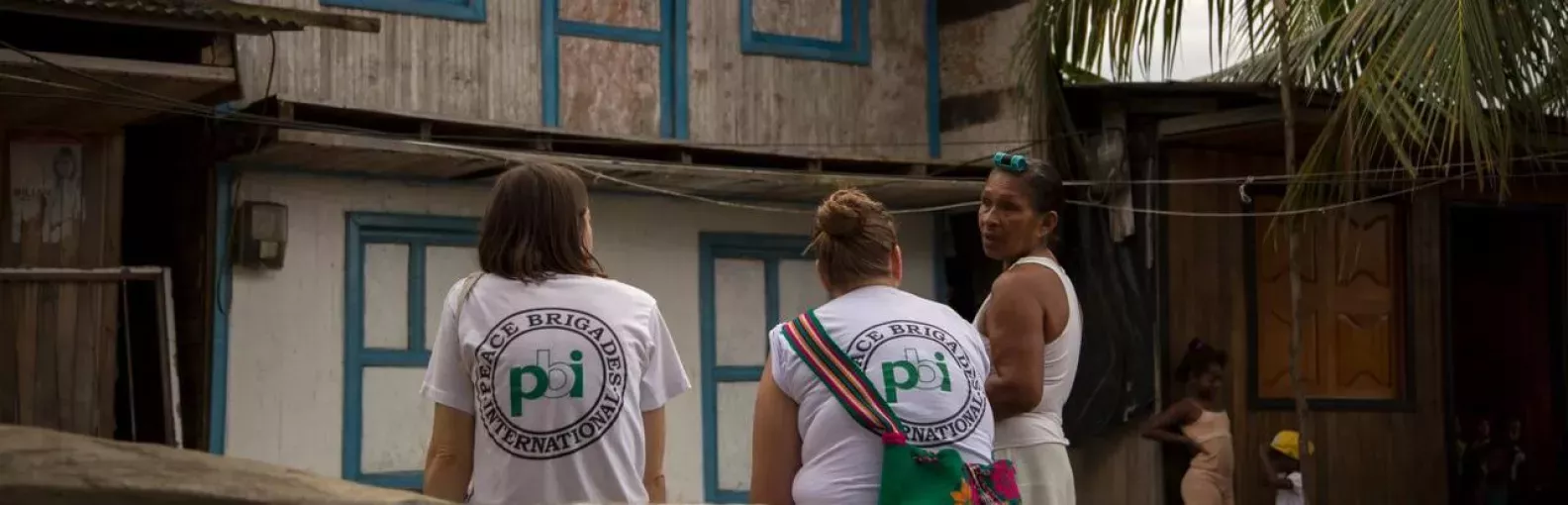
PBI provides protection and support to these human rights defenders in Colombia by combining a physical presence on the ground with a robust international network. This allows PBI to protect local defenders, support them in their work, and raise international awareness of their situation. The team works closely with local organizations to promote compliance with international human rights treaties, enabling defenders to continue their vital work for social justice and peace.